
Discover what’s included in a high-rise lightning risk assessment, from rooftop exposure and grounding to custom CMCE Lightning Suppression design and coverage.
Luxury high-rise lightning protection matters. Learn how CMCE technology helps protect elevators, HVAC, life-safety systems, rooftop equipment, and residents.
Discover how CMCE Lightning Suppression creates an invisible dome of protection that prevents lightning strike formation without impacting building aesthetics.
Start With Your Highest-Risk Facility: A Smarter Approach to Lightning Risk Across Energy Operations
Encore Land and Sea helps energy operators evaluate lightning risk, protect critical assets and develop portfolio-wide lightning protection strategies.
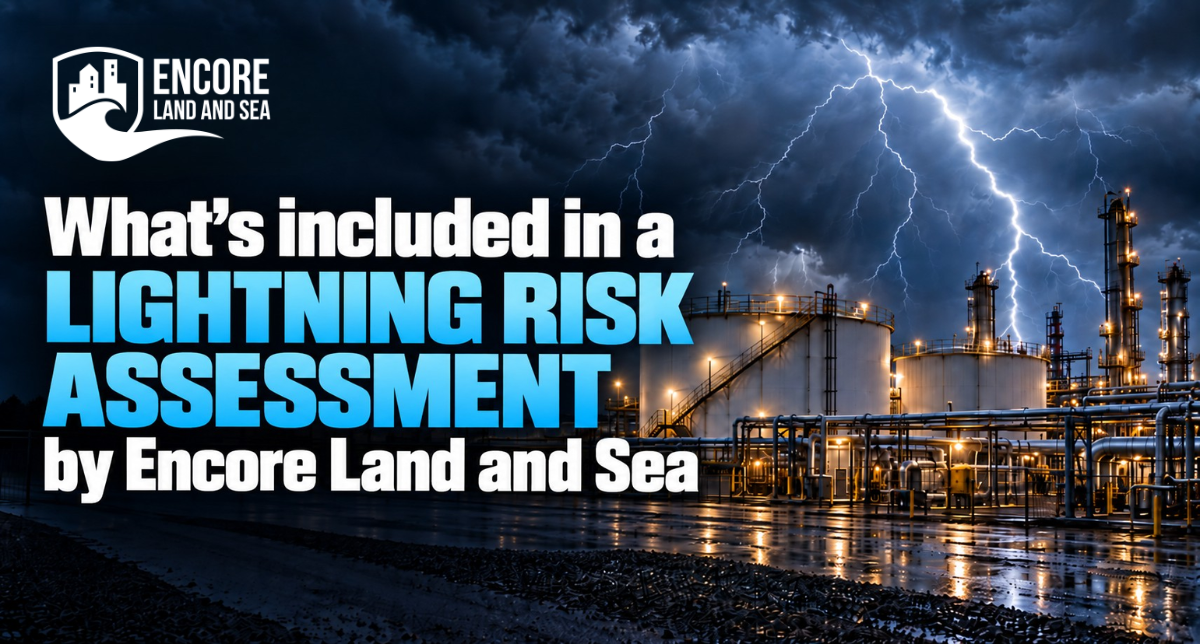
Learn what's included in a lightning risk assessment, from site exposure and critical assets to protection gaps, consequences, and risk reduction strategies.
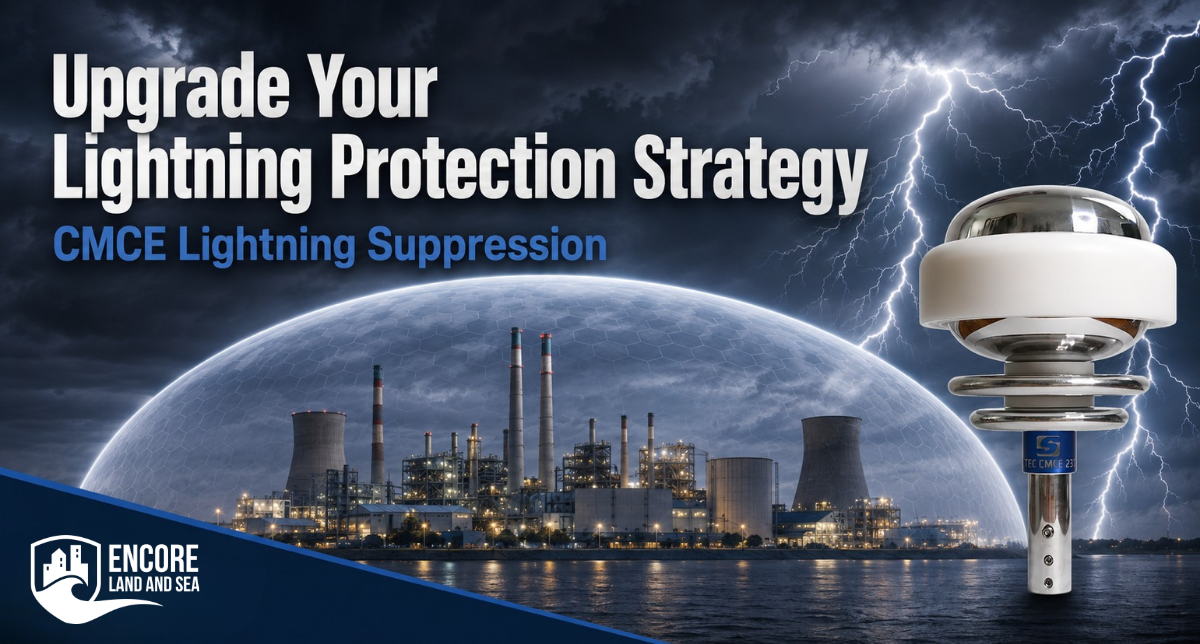
Modernize power generation lightning protection with CMCE technology designed to prevent strike formation, protect critical infrastructure, and reduce downtime.
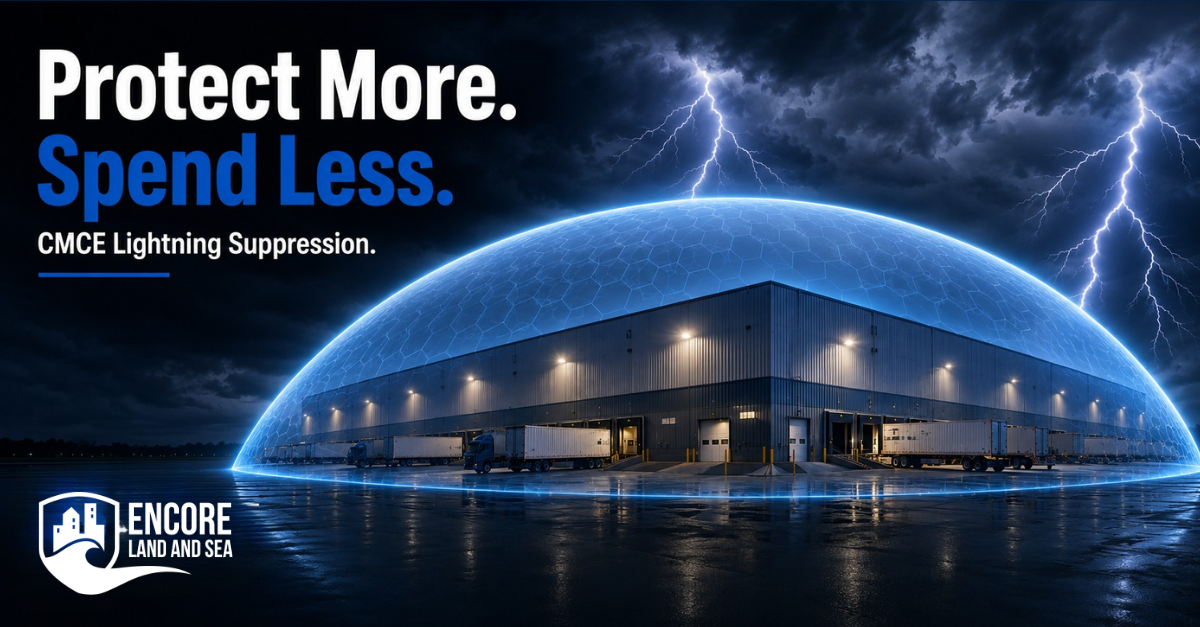
Protect large warehouses and facilities for less with CMCE Lightning Suppression, a more advanced, cost-effective alternative to traditional lightning rods.
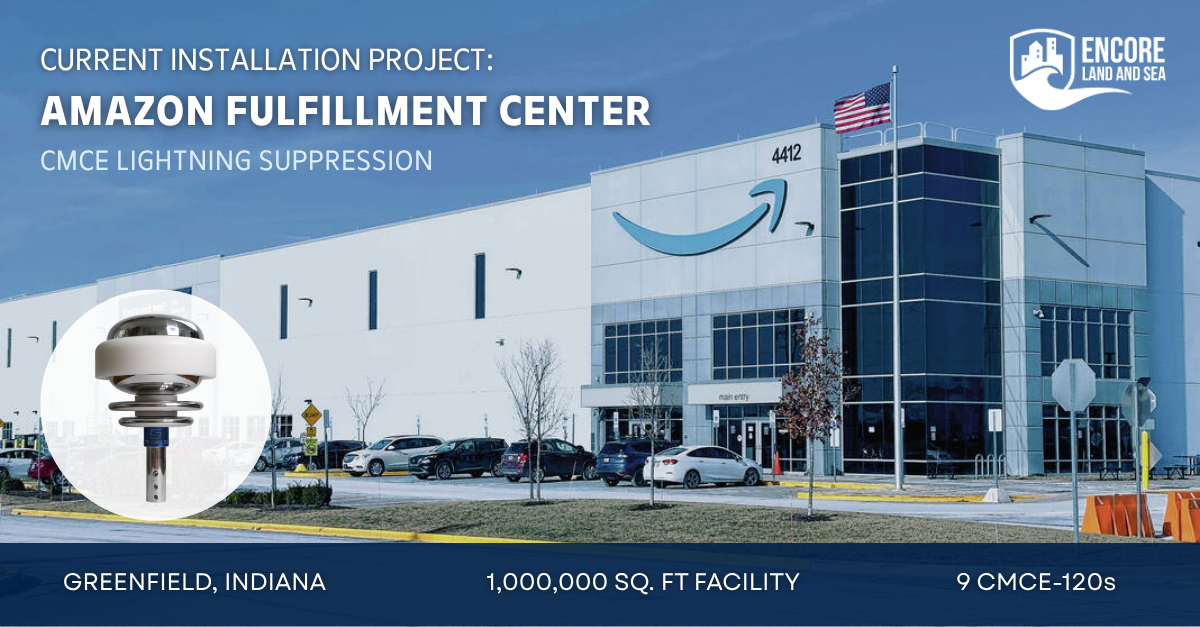
Inside a CMCE Lightning Suppression Installation: Amazon’s 1-Million-Square-Foot Greenfield Facility
Go inside Encore Land and Sea's current CMCE installation at Amazon's 1-million-square-foot Greenfield, Indiana facility, where nine CMCE-120s are being installed.
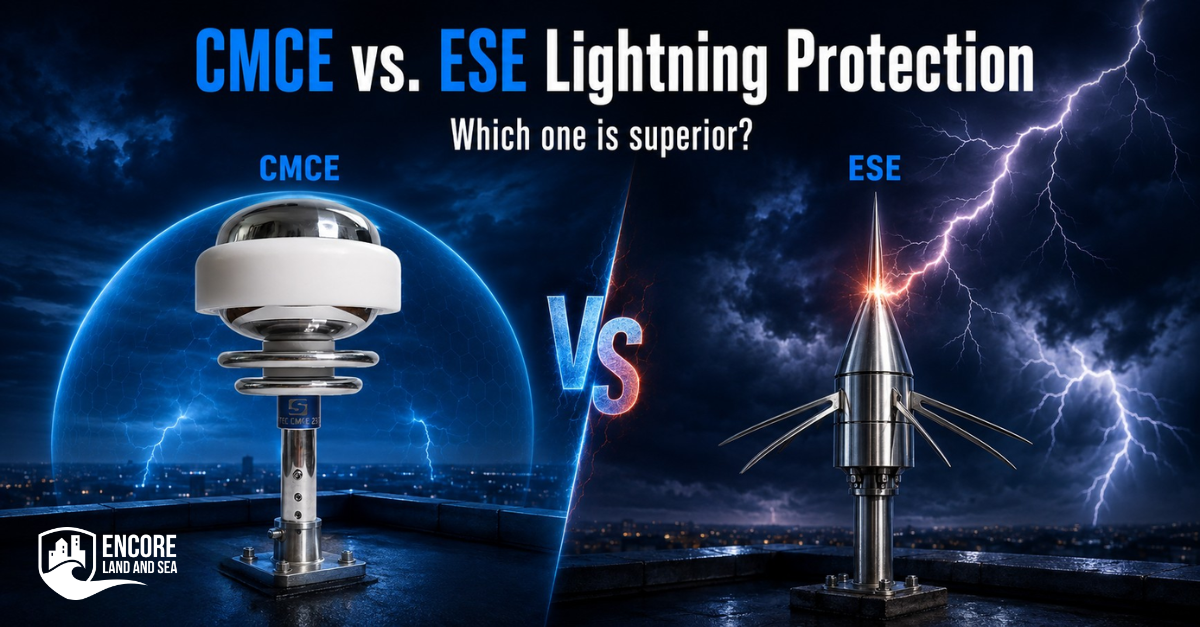
Compare CMCE and ESE lightning protection. Learn why ESE systems intercept strikes while CMCE is designed to prevent strike formation within its protected area.
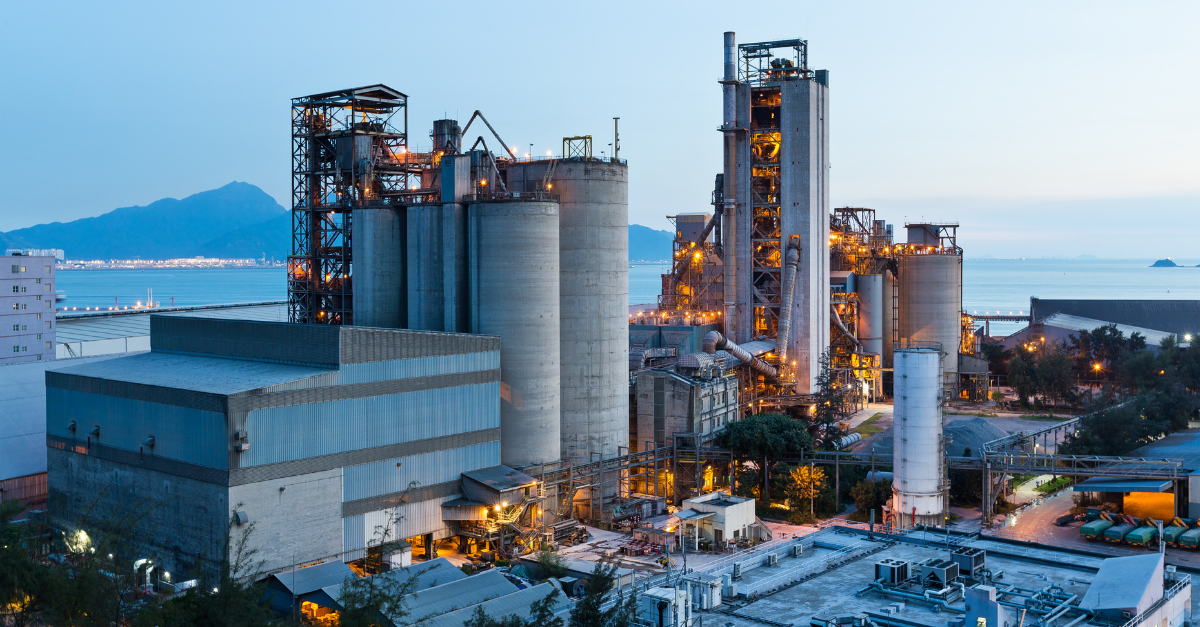
Discover the CMCE-AT-120 Lightning Suppressor, a durable, high-temperature lightning protection solution engineered for extreme industrial operation environments.