According to the National Weather Service,
lightning causes billions of dollars in damage annually and remains one of the leading weather-related threats to critical infrastructure.
As industries become increasingly dependent on AI, electrification, automation, smart infrastructure, and connected systems, the consequences of a lightning strike have never been greater. From data centers and substations to storage tank farms and manufacturing facilities, organizations are seeking more proactive ways to reduce lightning risk.
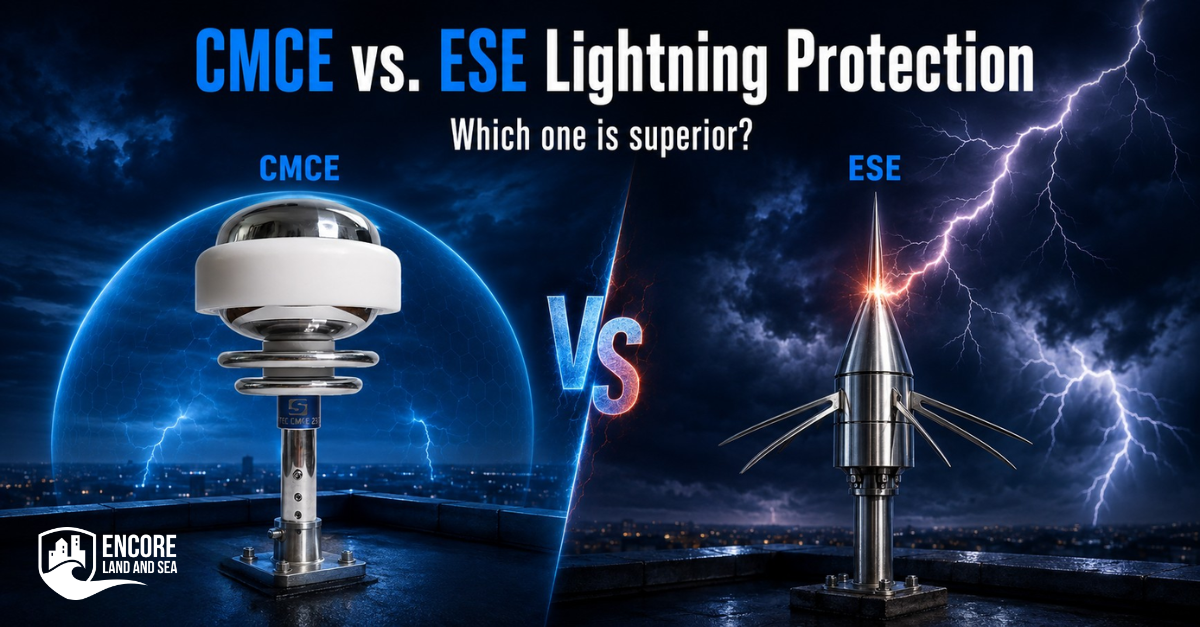
Unlike traditional lightning rods that intercept and redirect lightning after a strike occurs, the
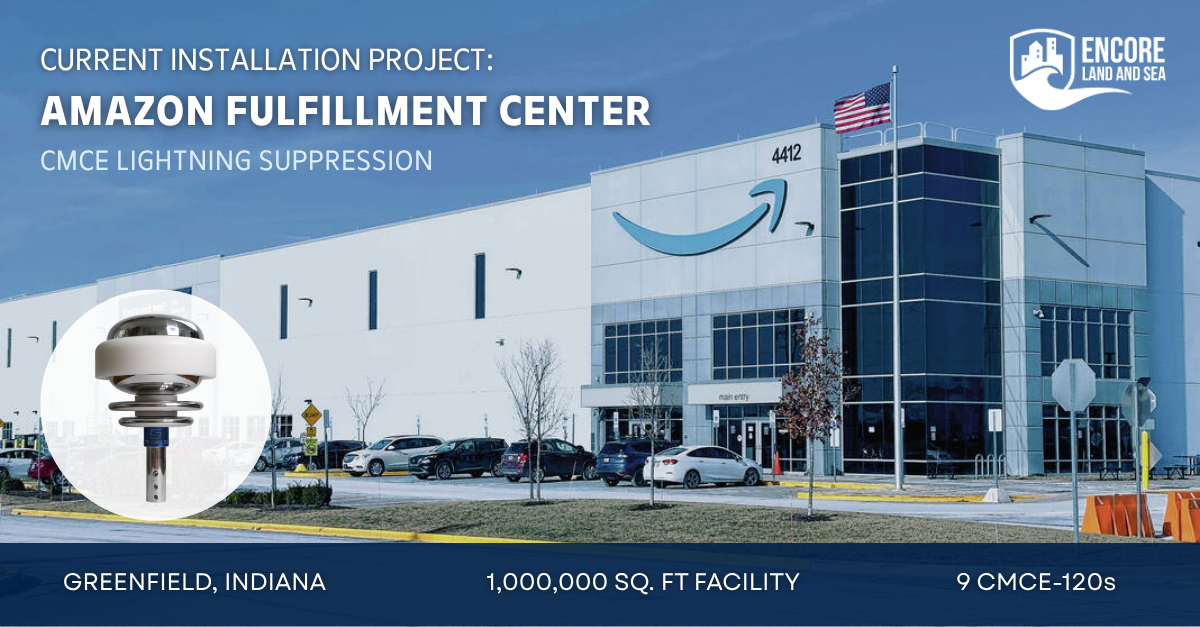
CMCE Lightning Suppression System is designed to neutralize the atmospheric conditions that allow lightning strikes to form in the first place.
The Limitations of Traditional Lightning Protection
Traditional lightning protection systems, such as those
outlined in NFPA 780, are designed to conduct lightning energy to ground once a strike occurs. While sometimes effective, they do not prevent lightning from forming near a protected asset.
For critical infrastructure, even a nearby lightning event can result in:
- Equipment damage
- Operational downtime
- Power disturbances
- Fire risks
- Costly repairs
As facilities become more technologically advanced, the need for proactive lightning risk mitigation continues to grow.
More Technology Means More Exposure
Today's infrastructure relies heavily on sensitive electrical and electronic systems. Data centers, utility assets, wastewater treatment plants, storage tanks, manufacturing facilities, and smart buildings all face increasing vulnerability to lightning-related disruptions.
The challenge is no longer just surviving a strike—it's reducing the likelihood of one occurring altogether.
How the CMCE Lightning Suppression System Works
The
CMCE Lightning Suppressor functions as a
Variable Electromagnetic Field Balancer (VEB), using patented technology to continuously balance the atmospheric electrical field around a protected property.
During storm conditions,
electrical charges build in the atmosphere. These charge imbalances create the conditions necessary for lightning formation.
The CMCE system works through a process called deionization. It
absorbs excess ionic charges in the atmosphere, converts them into harmless milliamperes, and safely dissipates the energy through a grounding conductor.
By continuously neutralizing atmospheric charge imbalances, the system suppresses the formation of upward streamers—the essential precursor to a lightning strike.
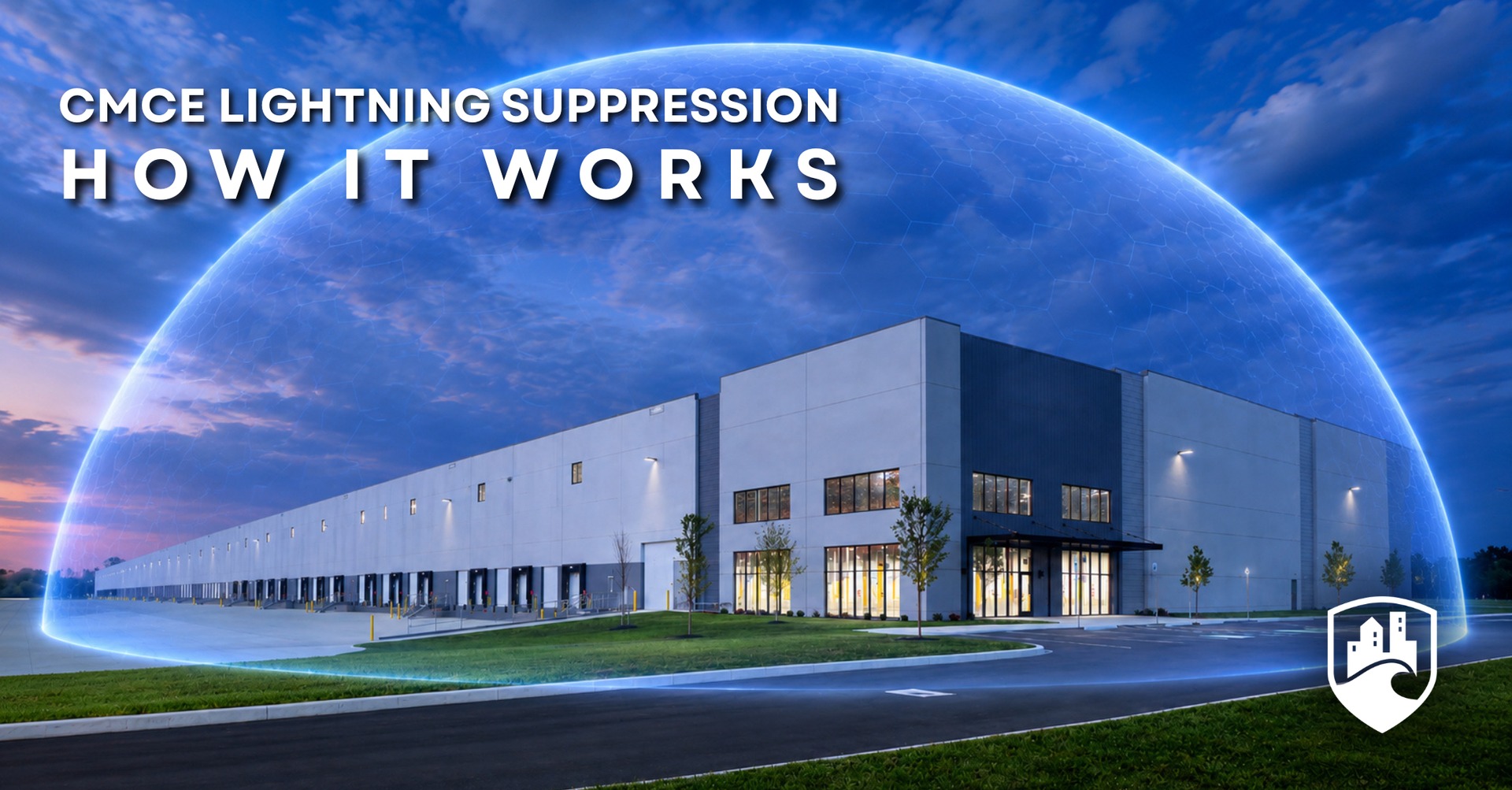
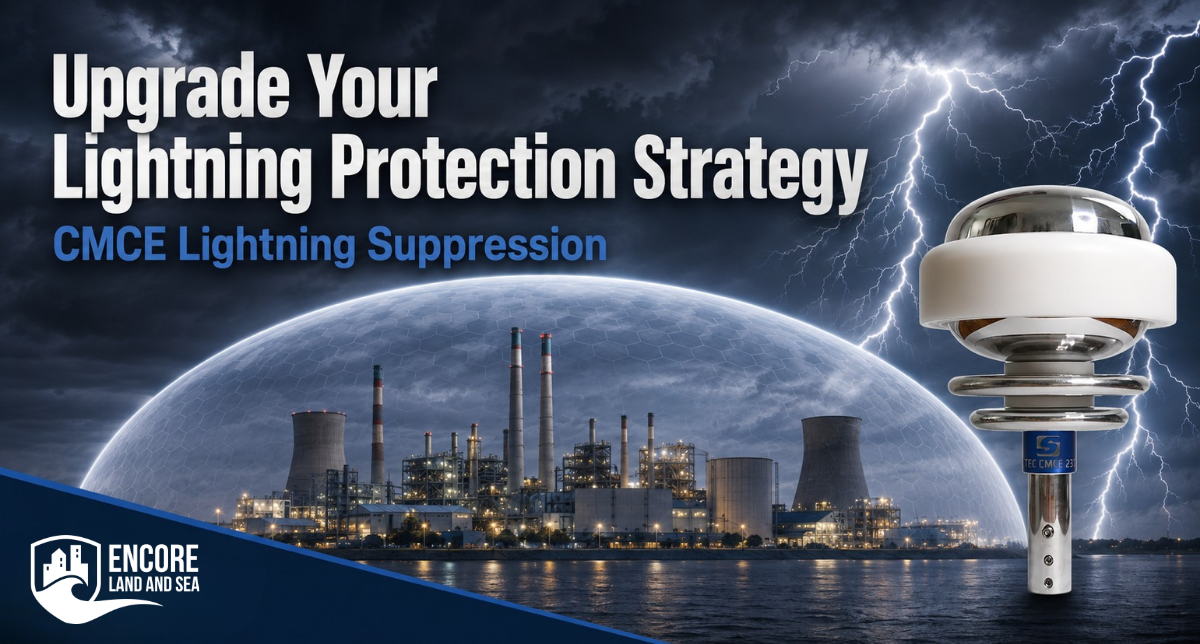
The result is a protected area often described as a
"dome of lightning-free protection."
Lab-Tested and Field-Tested Technology
CMCE Lightning Suppression Technology has undergone both laboratory testing and extensive real-world deployment.
Testing performed by
The Tesla Institute demonstrated that while a
conventional lightning rod generated ignition conditions during high-voltage testing, the
CMCE device safely dissipated electrical energy through its grounding system without ignition.
In addition to laboratory validation, CMCE systems have been
deployed globally for
more than 20 years across:
- Industrial facilities
- Utility infrastructure
- Storage tank farms
- Commercial buildings
- Residential properties
- Marine vessels
The technology is supported by multiple international certifications and approvals, including
UL, IEC, ISO, Lloyd's Register, and RINA.
Where is CMCE Lightning Suppression Used?
CMCE systems are installed to protect:
- Storage tanks and tank farms
- Oil and gas facilities
- Wastewater treatment plants
- Electrical substations
- Manufacturing facilities
- Data centers
- Telecommunications infrastructure
- Commercial properties
- Luxury residential homes
- Marine and offshore assets
Why Organizations Are Choosing Lightning Suppression
As critical infrastructure becomes more connected and more valuable, organizations are looking beyond traditional strike interception systems.
CMCE Lightning Suppression Technology provides a proactive approach by continuously neutralizing the atmospheric conditions that contribute to lightning formation. Operating without external power, batteries, or ongoing intervention, the system works around the clock to help protect high-value assets and critical operations.
Elevate Your Property Before the Next Storm
Contact Encore Land and Sea to
request a proposal and learn how
CMCE technology can protect your property from the dangers of lightning strikes.
Phone:
(888) 360-7786
Email:
sales@encorelandandsea.com
Website:
www.encorelandandsea.com