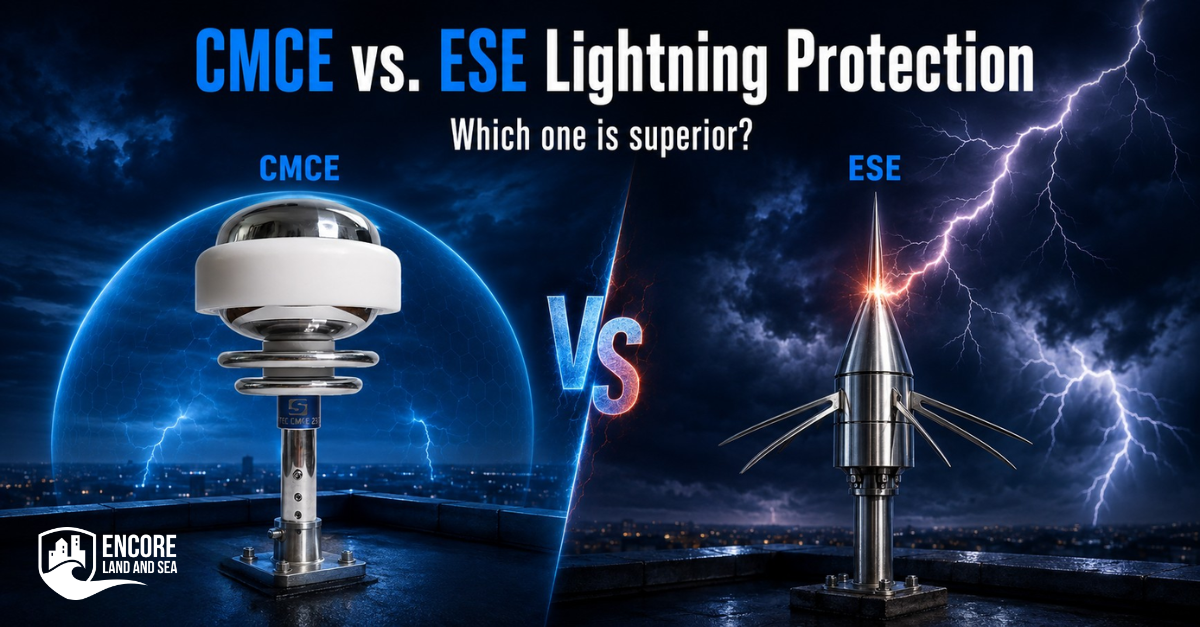
CMCE and ESE devices may both be installed above a structure and connected to grounding, but they are not variations of the same technology.
An
Early Streamer Emission (ESE) lightning protection system is designed to initiate an upward streamer earlier than a conventional lightning rod. Its objective is to become the preferred attachment point, receive the lightning strike, and conduct the electrical current to the ground.
The
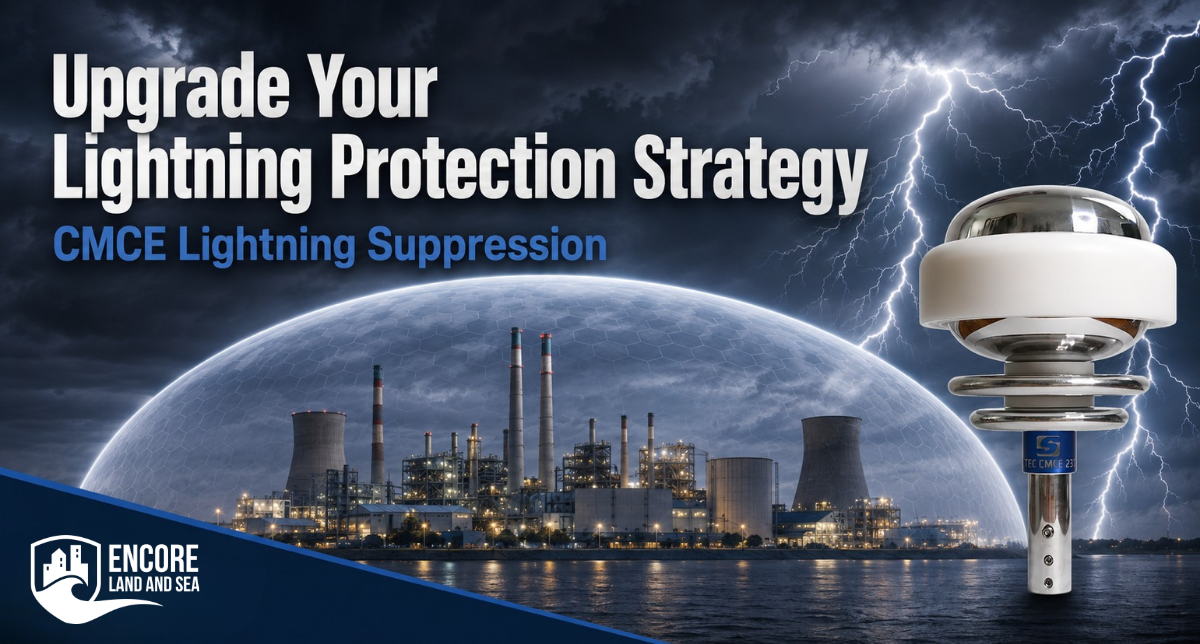
CMCE Lightning Suppressor is designed to do the opposite. Instead of encouraging an upward streamer, it neutralizes the surrounding atmospheric electrical conditions required for lightning formation. Using a proven process called deionization, CMCE creates a dome over the protected area where lightning cannot form or strike.
The central difference is simple:
ESE is designed to capture lightning. CMCE is designed to prevent strike formation within its protective zone.
How Do CMCE and ESE Systems Work?
How ESE Lightning Protection Works
ESE stands for
Early Streamer Emission. During a thunderstorm, the terminal is designed to launch an upward streamer sooner than a simple rod under comparable conditions. The streamer is intended to connect with a descending leader, creating a controlled attachment point.
The
National Weather Service's explanation of the lightning attachment process describes how a descending leader connects with an upward streamer to establish the conductive path that becomes a lightning flash.
When an ESE system performs as intended, the strike still occurs. Its current travels through the air terminal, down conductors, and grounding network. ESE changes where lightning is intended to attach; it does not attempt to stop the attachment itself.
ESE systems are commonly designed under standards such as NF C 17-102 or UNE 21186, depending on the jurisdiction. Protection radius is typically calculated using the terminal's tested streamer-advance time, installation height, and selected protection level.
UL Solutions also provides ESE installation evaluations based on manufacturer specifications for qualifying systems.
How CMCE Lightning Suppression Works
Designed using Nikola Tesla patent technology, the
CMCE Lightning Suppressor is a Variable Electromagnetic Field Balancer (VEB) that continuously operates without power to prevent strike formation.
The CMCE uses a scientifically proven process called deionization to draw in excess positive and negative ionic charges that accumulate during a thunderstorm. It internally rearranges those charges, converts them into harmless milliamperes, and dissipates that low-level current through grounding.
By balancing the surrounding electrical field, the CMCE is designed to inhibit the upward streamers required for lightning attachment. The result is broad dome of coverage where direct strike formation is suppressed—not a designated point where lightning is invited to land.
Why CMCE Is the Superior Approach
CMCE Addresses the Threat Before Impact
An ESE system is considered successful when lightning attaches to its terminal, and the current is routed toward earth. That is preferable to an uncontrolled attachment, but the property itself still experiences a direct lightning event.
CMCE takes a more proactive approach. It eliminates the conditions that lead to lightning strike formation. For properties concerned about ignition, electrical disruption, equipment damage, and downtime, preventing strike formation altogether is a stronger operational objective than managing the current after impact.
Suppression Eliminates Dependence on a Perfect Strike Path
A strike-interception system depends on every part of the current path performing correctly when lightning arrives: terminal, connections, down conductors, bonding, separation distances, and grounding.
CMCE still requires an grounding system, but its intended purpose is to keep the harmless milliamperes flowing continuously from the device, preventing electrical disruptions. This approach is particularly valuable for industrial plants, utilities, telecommunications sites, emergency operations, marinas, and high-rise properties where a brief electrical interruption can create widespread operational consequences.
CMCE Safeguards More Than Just Structures
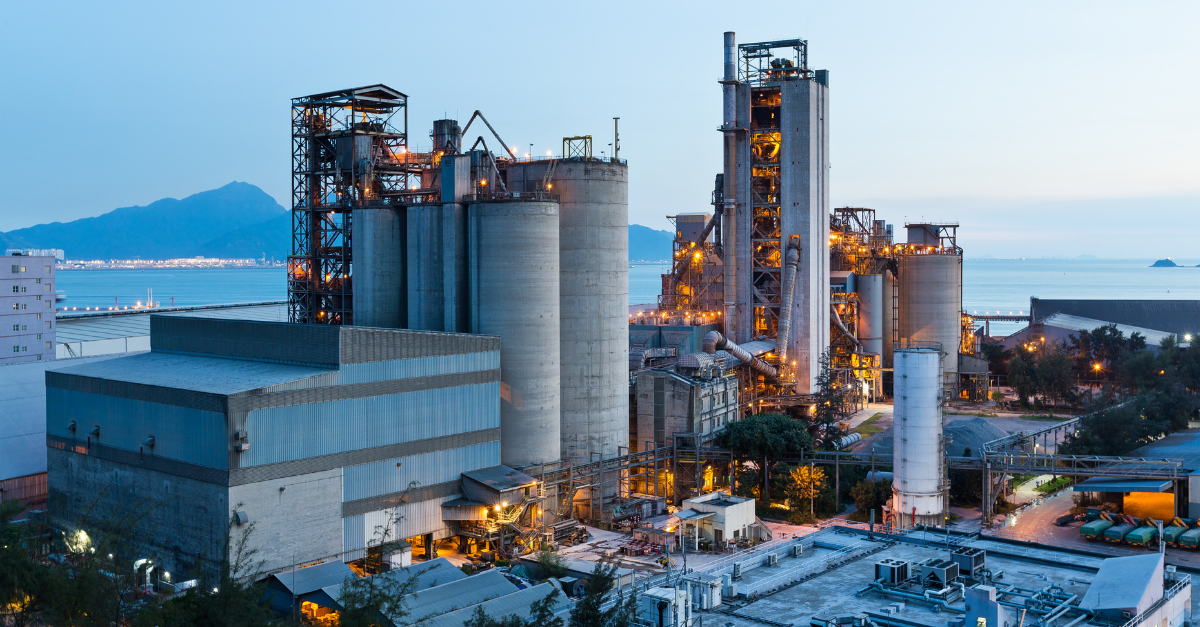
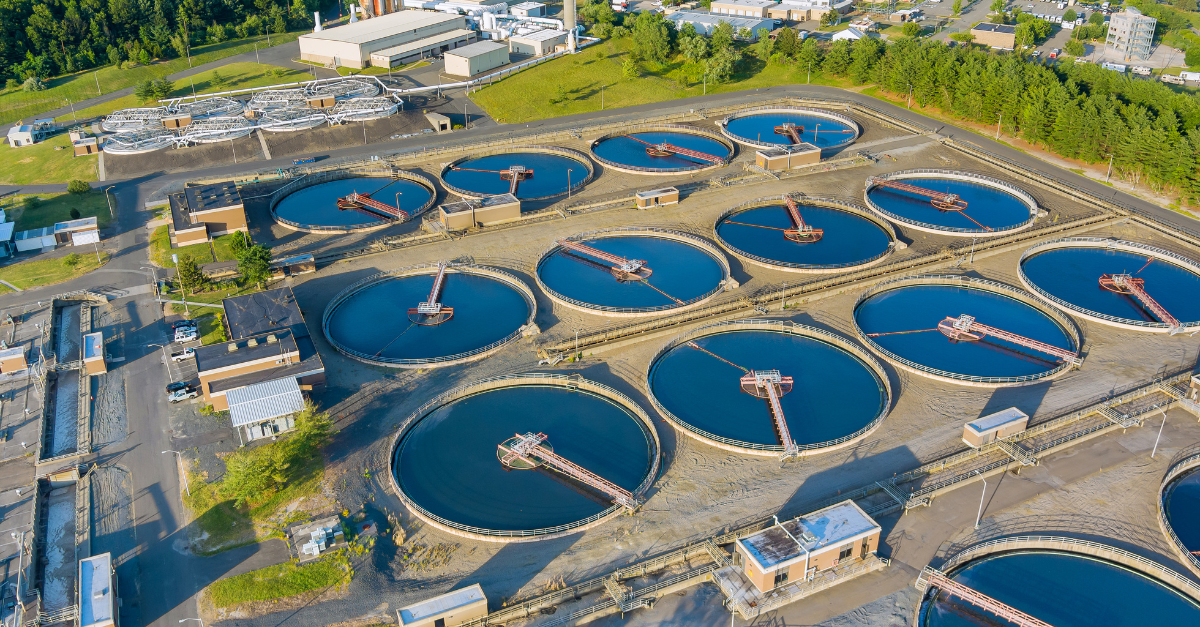
Facilities rarely need to protect only one rooftop point. Exposed assets may include parking areas, tanks, communications equipment, towers, outdoor work zones, marine infrastructure, and sensitive building systems.
The
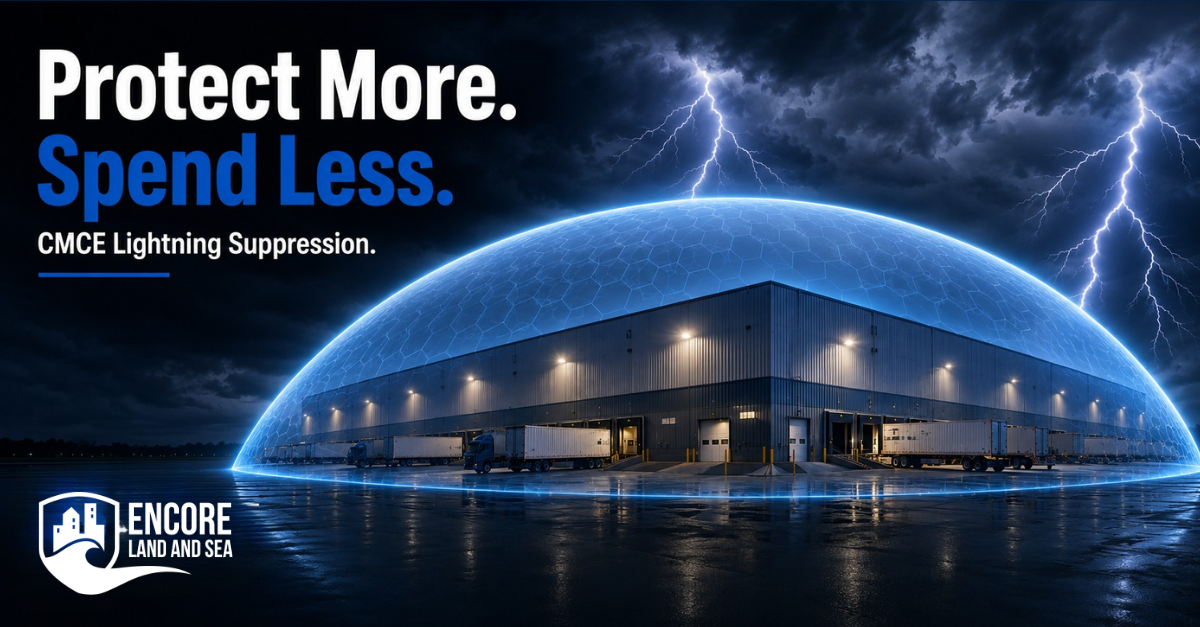
CMCE Lightning Suppressor System provides an invisible protective dome around the property, preventing strike formation within the surrounding atmosphere. This allows the protection strategy to address the larger operational area rather than focusing only on where a strike should land.
Passive, Continuous Operation
CMCE operates continuously without power, batteries, software, or manual activation. This passive design supports reliable, low-maintenance protection for both occupied properties and remote facilities.
Confidence Backed by Testing and Real-World Performance
With over 12,000 successful installations across industrial, commercial, marine, and residential applications, CMCE delivers confidence backed by:
- Laboratory and field testing
- Advanced UL-certified technology
- Internationally recognized standards, certifications, compliance marks, codification, and third-party evaluations—including
IEC, RoHS, ISO,
NATO, ITE,
Lloyd's Register,
RINA, and more
- Technology based on a Nikola Tesla patent
- Proven performance across demanding environments, from industrial facilities to open water
This combination of advanced engineering, independent testing, recognized credentials, and real-world performance distinguishes CMCE from systems designed primarily to receive and redirect a strike. For organizations protecting critical equipment, continuous operations, personnel, or valuable property, CMCE provides a superior approach supported by decades of application across diverse environments.
Choose the Outcome You Want
When comparing CMCE vs. ESE lightning protection, begin with one question:
Do you want to receive lightning at a controlled point, or use a system designed to prevent strike formation altogether within the protected area?
ESE offers a modified strike-capture strategy. CMCE changes the strategy by addressing the electrical conditions that support attachment. That proactive approach—combined with passive operation and broad engineered coverage—makes CMCE the superior solution for organizations seeking to eliminate direct-strike risk and protect operational continuity.
Upgrade Your Protection Strategy
Contact Encore Land and Sea to
request a proposal and learn how
CMCE technology can protect your property from the dangers of lightning strikes.
Phone:
(888) 360-7786
Email:
sales@encorelandandsea.com
Website:
www.encorelandandsea.com