Your industrial facility has lightning rods installed.
But does that mean your critical infrastructure, electrical equipment, and operations are fully protected from lightning damage?
Not necessarily.
Traditional lightning protection systems are designed to intercept lightning strikes and conduct their electrical current into the ground. However,
lightning rods do not prevent lightning from occurring, and even a properly installed system cannot guarantee complete protection against electrical surges, equipment damage, or operational downtime.
For
industrial facilities handling flammable materials, sensitive technology, and mission-critical operations, the consequences of a lightning strike can be significant.
It's time to rethink your industrial lightning protection strategy.
How Do Conventional Lightning Rods Work?
Conventional lightning rods use a reactive approach to lightning protection.
When lightning strikes, a properly designed lightning rod system provides a preferred conductive pathway for the electrical current to travel safely into the ground.
While this can help reduce structural damage and fire risks, the system does not stop lightning from striking.
Additionally, lightning-related electrical surges can still affect sensitive systems, especially when grounding, bonding, or surge protection is inadequate.
For
industrial facilities, this raises an important question:
Is managing a lightning strike enough—or should your facility also explore technologies designed to prevent strike formation?
The Hidden Risks of Lightning Strikes at Industrial Facilities
Industrial facilities face unique lightning exposure because of their extensive electrical infrastructure, outdoor equipment, and potentially hazardous operating environments.
A direct or nearby lightning strike can threaten:
- Electrical substations and switchgear: Power disruptions, electrical faults, and expensive equipment repairs.
- PLC, SCADA, and control systems: Damage to sensitive electronics, automation equipment, and monitoring technology.
- Chemical and flammable material storage: Increased fire and ignition hazards in environments containing combustible products.
- Manufacturing and processing equipment: Unexpected production shutdowns and operational disruptions.
- Communication and safety systems: Damage to essential monitoring, alarms, and emergency infrastructure.
Even when a traditional lightning protection system intercepts a strike, the facility may remain exposed to other lightning-related hazards.
One lightning event can result in costly repairs, lost production, and extended downtime.
CMCE Lightning Suppression: A Different Approach to Industrial Lightning Protection
What if your lightning protection strategy focused on preventing strike formation rather than simply intercepting a strike?
That's the approach behind
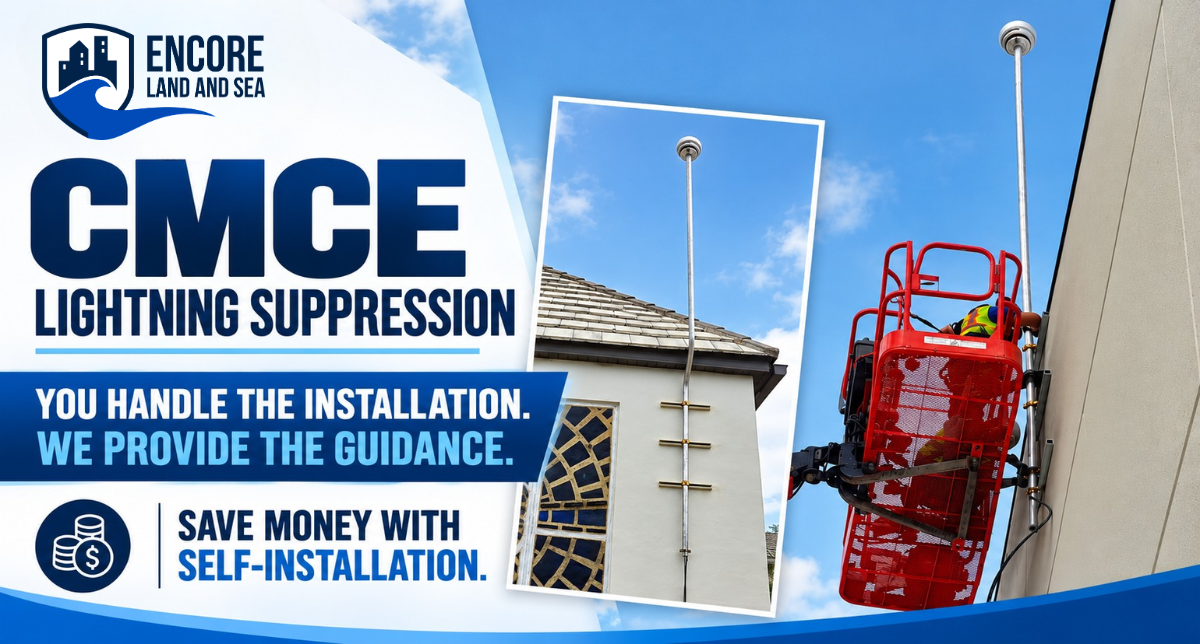
CMCE Lightning Suppression, offered by Encore Land and Sea.
Unlike conventional lightning rods, CMCE technology is marketed as a proactive lightning suppression system designed to significantly reduce the conditions associated with lightning strike formation.
The CMCE system continuously works without power to neutralize the surrounding atmospheric electrical field, reducing electrical charge accumulation to inhibit the development of upward streamers involved in lightning attachment.
This approach is intended to reduce direct lightning strike risk across its designated coverage area.
Why Industrial Facilities Consider CMCE Lightning Suppression
- Proactive technology: Designed to significantly reduce the risk of direct lightning strikes.
- Extensive coverage: The CMCE-120 provides up to 500,000 square feet of coverage per unit, depending on installation and site conditions.
- Passive operation: No external power source required.
- Low-maintenance design: Intended for long-term industrial applications.
- Industrial versatility: Applicable to manufacturing plants, chemical facilities, oil and gas operations, wastewater treatment plants, and critical infrastructure.
CMCE's claimed strike-prevention capability should be evaluated against independent testing, applicable lightning protection standards, and site-specific engineering requirements.
Don’t Wait Until Lightning Causes Costly Damage
If your industrial facility relies on conventional lightning rods, now is an opportunity to evaluate whether your existing protection strategy adequately addresses the risks to your operations.
Lightning protection should account for more than the building itself. Your electrical systems, automated equipment, critical infrastructure, and operational continuity all deserve consideration.
A lightning rod system is not a guarantee against lightning damage. Your protection strategy shouldn't stop at the rooftop.
Explore CMCE Lightning Suppression with Encore Land and Sea
Encore Land and Sea works with industrial facility managers and operators to evaluate lightning exposure and develop customized
CMCE Lightning Suppression proposals.
Request a custom proposal or schedule a consultation today to learn how
CMCE Lightning Suppression can protect your facility from the dangers of lightning strikes.
Phone:
(888) 360-7786
Email:
sales@encorelandandsea.com
Website:
www.encorelandandsea.com