Understand Your Property’s Lightning Exposure with Encore Land and Sea
Every high-rise has a different lightning risk.
Building height, rooftop equipment, coastal exposure, grounding conditions, surrounding structures, and interconnected electrical systems can all influence a property’s vulnerability.
That is why Encore Land and Sea begins with a
custom high-rise lightning risk assessment before recommending a
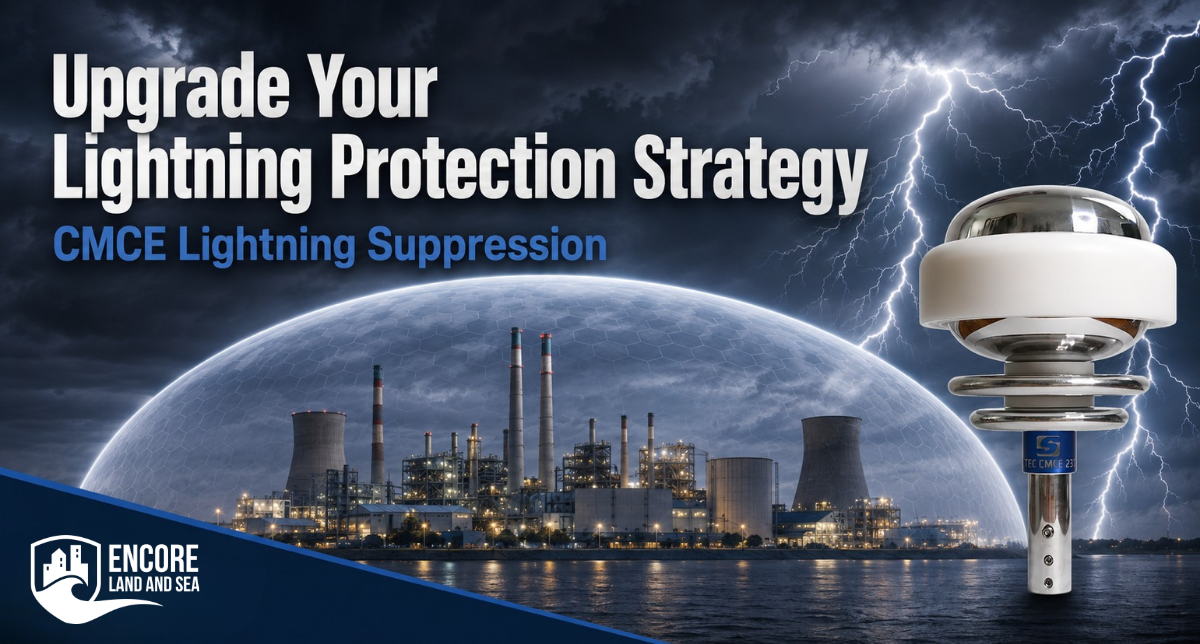
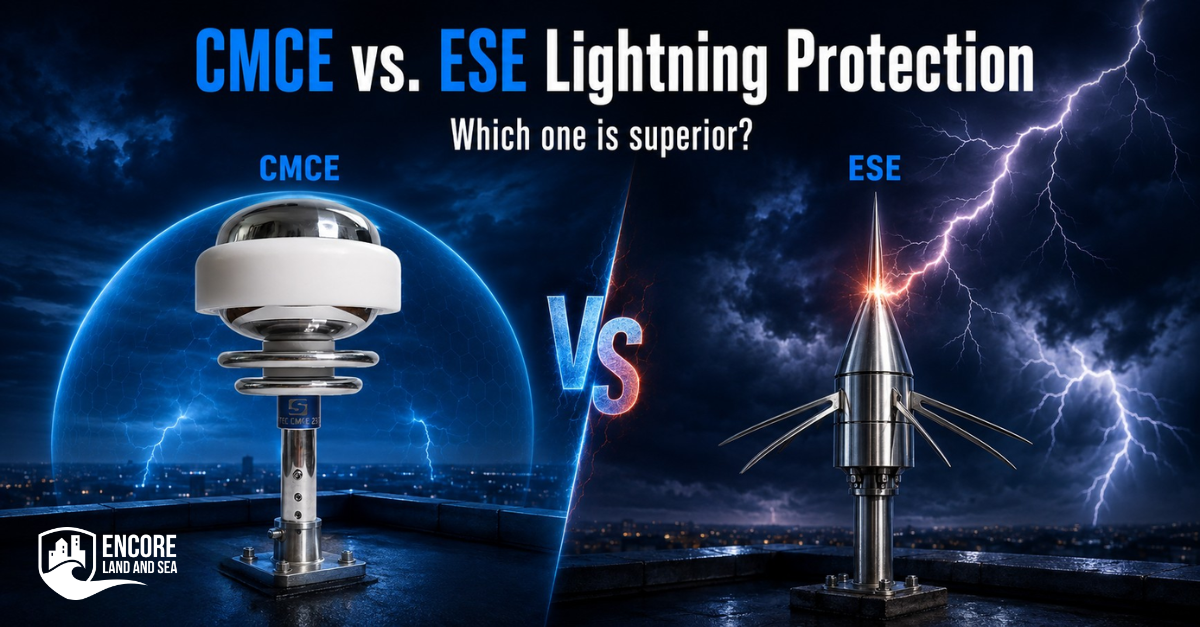
CMCE Lightning Suppression system.
Our assessment helps property managers, condominium boards, and building owners understand their relative lightning exposure and receive a site-specific protection proposal.
Lightning Risk Is Different for Every High-Rise
A coastal condominium tower faces different conditions than an inland residential building.
Encore evaluates factors such as:
- Building height and exposure
- Rooftop equipment
- Coastal and storm-prone location
- Building materials
- Soil and grounding conditions
- Nearby structures and hazards
- Electrical and communication systems
Together, these factors help determine the building’s overall lightning exposure and protection needs.
A Detailed Site and Risk Evaluation
Encore performs a detailed review of the property to better understand where lightning-related vulnerabilities may exist.
We evaluate the structure, rooftop configuration, grounding environment, critical equipment, and surrounding conditions.
Lightning-density information and available ground-resistance data can also be considered when developing the recommended system design.
The goal is simple:
understand the building before designing the protection.
A Custom CMCE Lightning Suppression Design
No two properties are the same, so no two CMCE installations should be identical.
Based on the assessment, Encore develops a customized design that considers:
- CMCE model selection
- Device placement
- Mounting height
- Grounding configuration
- Conductor routing
- Required protection coverage
Whether protecting a high-rise condominium, industrial facility, or marine property, each system is designed around the specific site.
Custom CMCE Coverage Maps
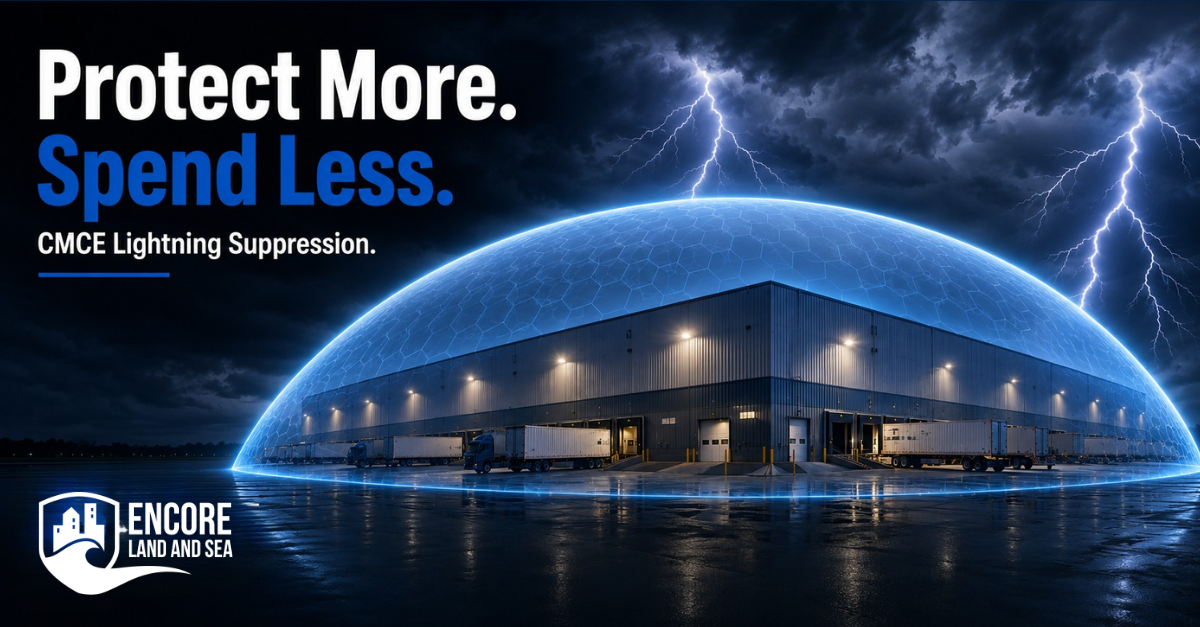
Encore also provides a
custom CMCE coverage overview for the property.
These maps visually illustrate the proposed placement and protection radius of each CMCE device, helping property managers and boards understand how the system is intended to cover the building and critical rooftop assets.
Before installation begins, you can see how the protection strategy is designed around your property.
What Is Included in a High-Rise Lightning Risk Assessment?
A typical assessment may evaluate:
- Building height and exposure
- Rooftop mechanical and communication equipment
- Coastal and storm-prone conditions
- Building materials and configuration
- Grounding and soil conditions
- Critical electrical systems
- Surrounding structures and hazards
- Existing lightning protection
- CMCE model and placement recommendations
- Grounding and conductor routing
- Custom CMCE coverage mapping
- Personalized
CMCE Lightning Suppression proposal
Know Your Building’s Lightning Risk
A high-rise is a major investment, and lightning risk should not be left to assumption.
Encore Land and Sea helps property managers, condominium associations, and building owners better understand their property’s lightning exposure and develop a
custom CMCE Lightning Suppression strategy based on the building’s unique characteristics.
Understand Your Property’s Lightning Risk Before It’s Too Late
If you are evaluating lightning protection for your condominium, Encore Land and Sea can evaluate your property's lightning exposure and develop a customized
CMCE Lightning Suppression design.
Request a proposal or
schedule a consultation with our team today.
Phone:
(888) 360-7786
Email:
sales@encorelandandsea.com
Website:
www.encorelandandsea.com