Why Lightning Protection Matters for Data Centers
Today's data centers power cloud computing, artificial intelligence, financial services, healthcare systems, and countless other mission-critical operations. With so much depending on uninterrupted performance,
even a brief outage can result in significant financial losses, equipment damage, and service disruptions.
As data centers continue to expand across the country, many are being built in regions with high lightning activity. A
direct lightning strike can threaten critical infrastructure, interrupt operations, damage electrical systems, and require costly repairs—placing uptime, business continuity, and customer confidence at risk.
According to the
National Oceanic and Atmospheric Administration (NOAA), the United States experiences
tens of millions of cloud-to-ground lightning strikes each year, with states such as Florida, Texas, and other Gulf Coast regions seeing some of the highest lightning densities in the nation.
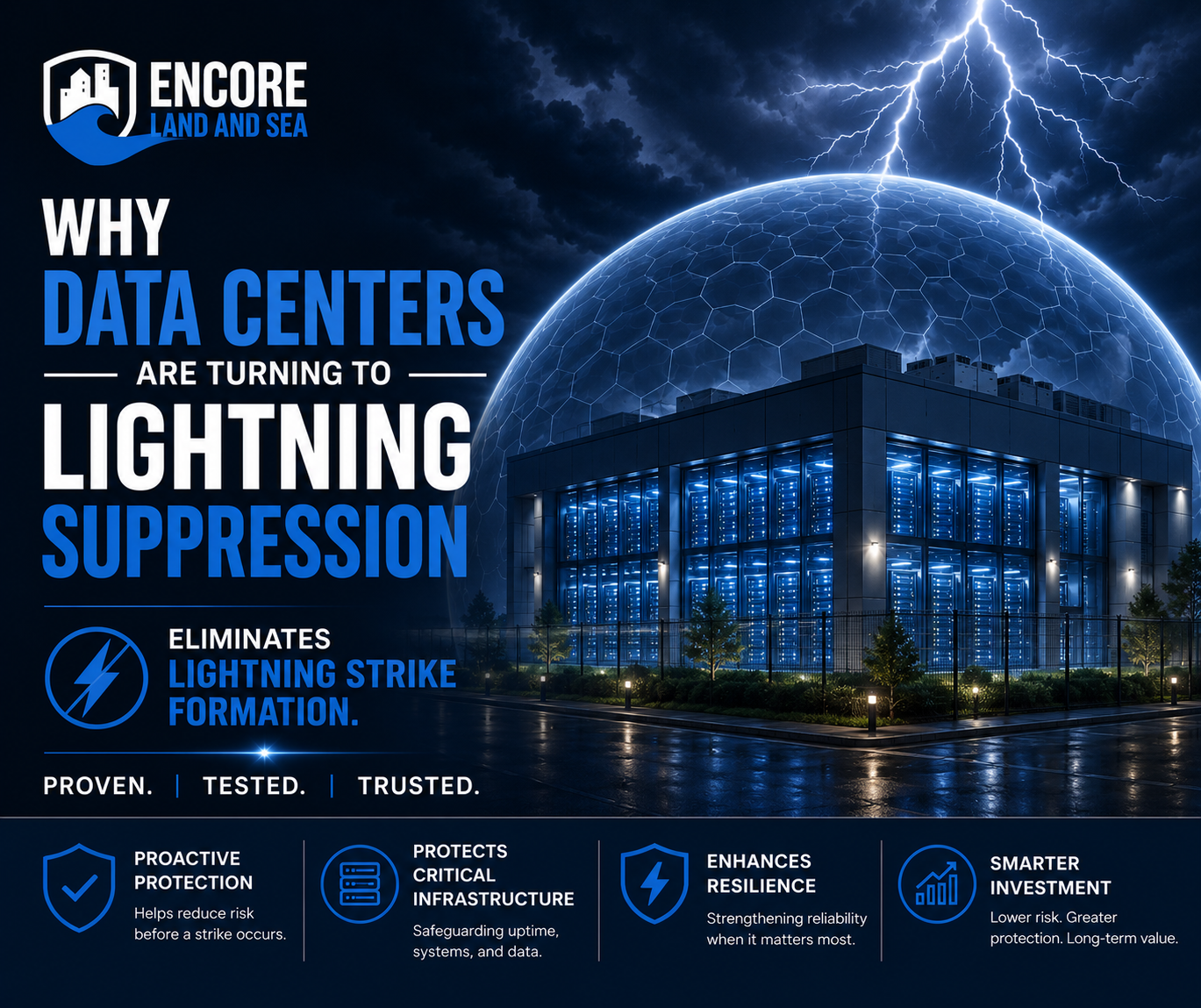
Because data centers are designed to operate continuously, protecting these facilities from direct lightning strikes has become a critical part of resilience planning. Increasingly, owners and engineers are looking beyond conventional lightning rods and adopting proactive lightning suppression technology to help reduce the risk of lightning attachment before a strike occurs.
The Limitation of Traditional Lightning Rods
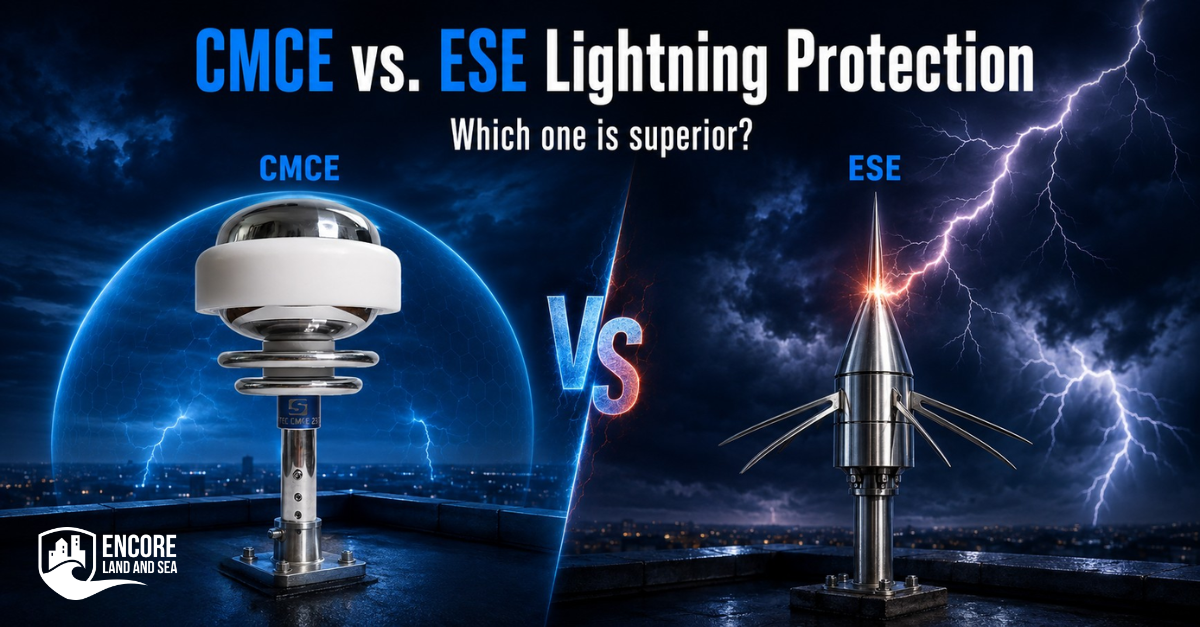
Conventional lightning protection systems—including lightning rods, air terminals, and conductors—are designed to intercept a lightning strike and safely carry its energy into the ground. This approach has protected structures for centuries and remains an important part of many facility designs.
However, traditional systems are inherently reactive. They manage lightning after a strike has already occurred.
Even when structural damage is prevented, a lightning event can still expose sensitive electrical systems to voltage transients, electromagnetic interference, equipment stress, inspections, and costly downtime.
For facilities where uptime is the highest priority, many operators are asking a different question: Can we reduce the likelihood of a lightning strike instead of simply managing one?
A Proactive Approach: CMCE Lightning Suppression
Unlike conventional lightning rods,
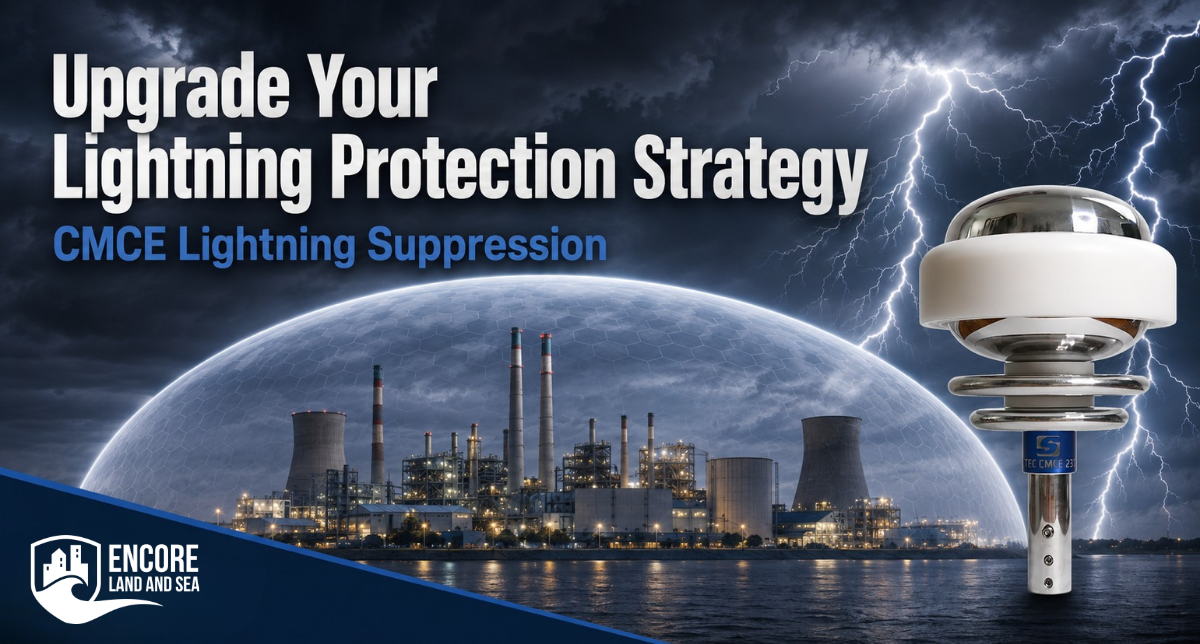
CMCE Lightning Suppression is designed to continuously dissipate atmospheric electrical charges around a protected structure.
Rather than waiting for lightning to form and directing it safely to ground, the system works to neutralize the localized electrical conditions that contribute to lightning formation near the facility.
This proactive process mirrors other critical infrastructure strategies:
- Fire suppression prevents fires before they spread.
- Cybersecurity blocks attacks before systems are compromised.
- Predictive maintenance identifies failures before equipment breaks.
- Lightning suppression helps reduce lightning risk before a strike occurs.
For data centers, preventing risk is often more valuable than simply responding to it.
Why Data Centers Are Choosing Lightning Suppression
Modern data centers contain highly sensitive infrastructure, including:
- High-density server racks
- UPS systems
- Backup generators
- Switchgear and electrical distribution
- Network equipment
- Cooling and building automation systems
- Fiber optic and communications infrastructure
Protecting these systems requires multiple layers of defense.
Grounding, bonding, and surge protective devices remain essential, but many operators now view
CMCE Lightning Suppression as an additional layer of resilience that helps reduce overall lightning exposure.
As organizations continue investing in AI, cloud computing, and hyperscale facilities, proactive risk reduction is becoming an increasingly important part of infrastructure planning.
Trusted Protection for Critical Infrastructure
CMCE Lightning Suppression has been installed on more than
11,000 facilities worldwide, protecting organizations where reliability is essential.
Applications include:
- Data centers
- Utility substations
- Water and wastewater treatment plants
- Manufacturing facilities
- Telecommunications infrastructure
- Oil and gas facilities
- Airports
- Government facilities
- Marine operations
The technology has been validated through laboratory testing and decades of real-world performance in some of the world's most lightning-prone environments.
Key Takeaway
As the demand for uninterrupted digital infrastructure continues to grow, data center operators are looking beyond traditional lightning protection.
Rather than simply preparing for a strike, they are investing in CMCE technology designed to reduce the likelihood of lightning affecting their facilities in the first place.
For organizations where every second of uptime matters,
CMCE Lightning Suppression offers a superior approach that replaces conventional protection methods, helping reduce operational risk while safeguarding the infrastructure that powers today's digital economy.
Elevate Your Lightning Protection Strategy
Contact Encore Land and Sea to
request a proposal and learn how
CMCE technology can protect your facility from the dangers of lightning strikes.
Phone:
(888) 360-7786
Email:
sales@encorelandandsea.com
Website:
www.encorelandandsea.com